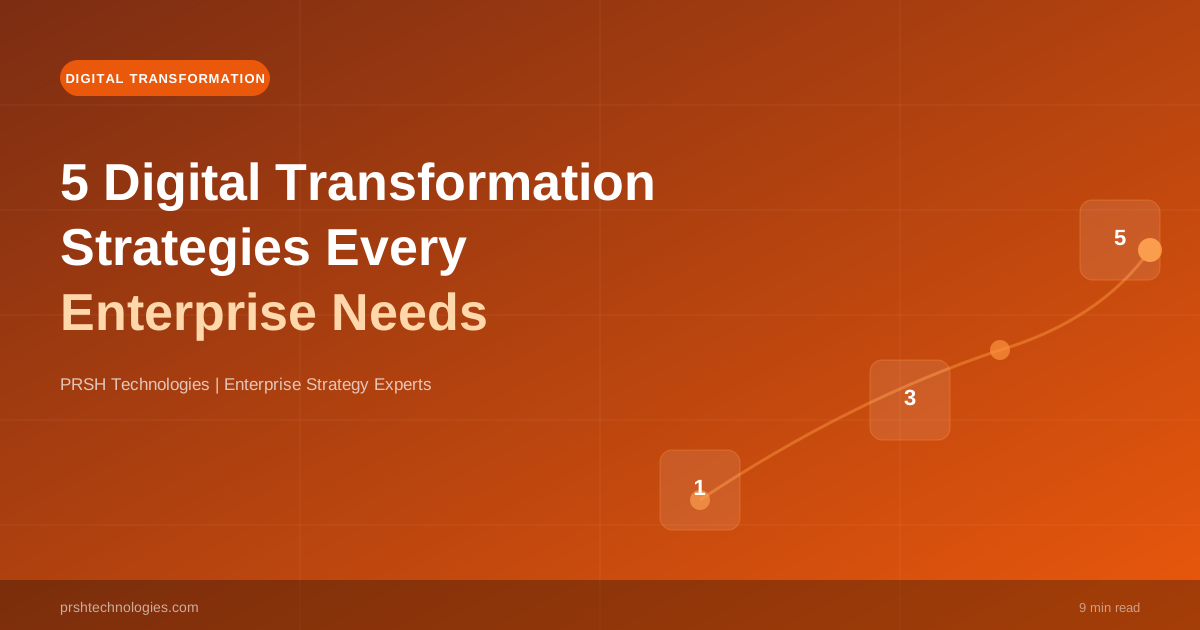
Digital transformation is no longer optional — it is a survival imperative. Explore the five foundational strategies that enterprise leaders must adopt to compete, innovate, and grow in an AI-driven business landscape.
The term "digital transformation" has been part of corporate vocabulary for more than a decade. Yet the gap between organisations that are genuinely transforming and those running sophisticated change communication programmes has never been more visible. In 2025, the stakes have risen sharply: AI-native competitors are entering established markets, customer expectations are accelerating, and the cost of operational inertia is growing. For enterprise leaders, now is the moment to move from strategy to committed execution. Here are the five foundational strategies that distinguish organisations that are winning their digital transformation from those that are stalling.
Cloud adoption is no longer a strategic option for most organisations — it is the operational and economic foundation of modern enterprise. Yet many large organisations still treat cloud as a selective deployment model, migrating individual workloads while maintaining a predominantly on-premise estate.
The transformative shift is adopting a cloud-first — or cloud-default — posture: any new workload, system, or application begins in the cloud unless there is a specific, justified reason not to. This posture drives cultural change (cloud becomes normal rather than exceptional), economic change (consumption-based pricing replaces heavy capital investment), and capability change (access to cloud-native AI, analytics, and developer tools accelerates innovation).
For SAP-driven enterprises, RISE with SAP provides a structured pathway to cloud adoption that packages software, infrastructure, services, and business process intelligence into a single subscription — making the cloud transition commercially and operationally straightforward.
Every organisation pays lip service to data as a strategic asset. Fewer treat it like one. Transformational organisations build deliberate data foundations: governed data platforms, clearly defined data ownership, consistent master data management, and data quality standards that ensure AI and analytics operate on reliable information.
The practical starting point is identifying the data domains that matter most to business outcomes — customer data, financial data, supply chain data — and investing in cleaning, governing, and integrating those domains first. From this foundation, analytics and AI capabilities deliver reliable insights rather than beautifully designed dashboards built on questionable data.
Task-level automation — replacing a single manual step with a script or bot — delivers limited value and often creates new integration complexity. The organisations achieving transformational efficiency gains are automating entire end-to-end processes: from requisition to payment, from lead to cash, from hire to retire.
End-to-end process automation requires integrated systems, clean data, and — increasingly — AI that can handle exceptions intelligently. SAP's intelligent process automation capabilities, available through SAP Build Process Automation, enable organisations to automate complex, multi-step workflows that span multiple systems while giving business users the tools to build and monitor these automations without heavy IT involvement.
Technology is rarely the limiting factor in enterprise AI adoption. Organisational readiness is. Transformational organisations invest deliberately in building AI literacy across their workforce — not to turn everyone into a data scientist, but to ensure every function can identify AI opportunities, engage intelligently with AI recommendations, and contribute to responsible AI governance.
This investment takes multiple forms: training programmes that build AI fundamentals for business users, centres of excellence that develop and share AI use cases across the organisation, and governance frameworks that ensure AI is deployed responsibly — with clear accountability for model performance, bias monitoring, and data privacy compliance.
Digital transformation built on top of a fragile legacy core is like renovating a house with a crumbling foundation. The innovations built in the digital layer are constrained by the capacity, reliability, and data quality of the underlying systems of record. Transformational organisations understand this and treat core system modernisation — migrating to SAP S/4HANA, moving ERP to the cloud, re-platforming legacy applications — as a strategic priority rather than an IT project.
The business case for core modernisation has never been stronger. The operational benefits of modern ERP — real-time analytics, embedded AI, process automation, superior user experience — compound over time, while the costs of maintaining legacy systems continue to escalate. Organisations that have completed their core modernisation programmes consistently outperform peers on operational efficiency, innovation speed, and talent retention.
The common thread across all five strategies is that digital transformation is fundamentally about people, processes, and culture — with technology as the enabler. Organisations that invest equally in change management, organisational capability building, and leadership alignment alongside technology deployment are the ones whose transformations endure and compound.
PRSH Technologies partners with enterprise leaders to design and execute digital transformation programmes that deliver measurable, sustainable results. From SAP modernisation to AI enablement and cloud migration, our consultants bring the expertise and the approach to help you move with confidence. Let us start with your transformation priorities.
Book a Transformation Strategy SessionGet SAP insights & tech updates delivered to your inbox.
Connect with PRSH Technologies' SAP experts for a free consultation and discover what's possible for your business.


No approved comments yet. Be the first to comment!